


Highlights from WESC 2025
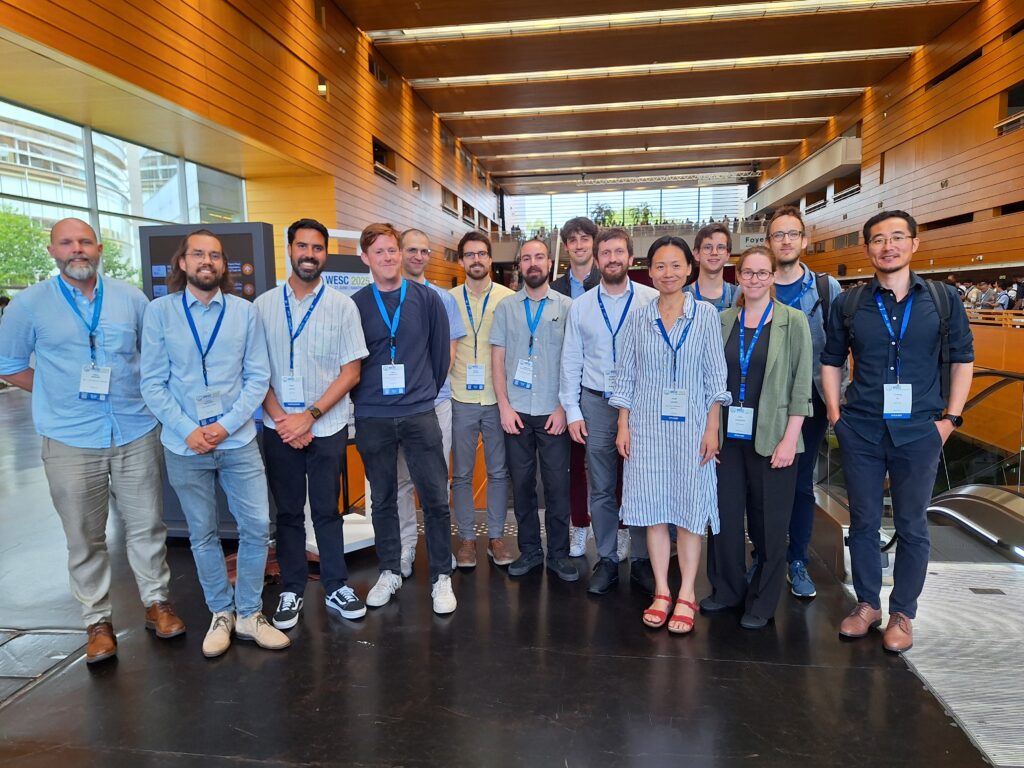
Wed 02 Jul 2025Several DTWO partners participated in the Wind Energy Science Conference 2025 (WESC 2025), held in Nantes, France. The conference brought together researchers, engineers, and industry professionals to share the latest advancements in wind energy science.
Held from 24 to 27 June, WESC 2025 provided a dynamic platform to explore the future of wind energy, with a strong focus on digitalization, system integration, and offshore innovation. “Our participation at WESC 2025 was a significant opportunity to present the value and progress of DTWO,” stated Xiaoli Guo Larsén, DTWO project coordinator, Professor Xiaoli Larsèn of DTU Wind and Energy System, “I introduced the project, highlighting DTWO’s framework and its relevance in enabling robust, data-driven wind system optimization.” Also, from DTU, Sara Müller showcased a novel method to generate wind fields that capture variability at both meso- and microscale, supporting more precise turbulence modelling relevant for large turbines.
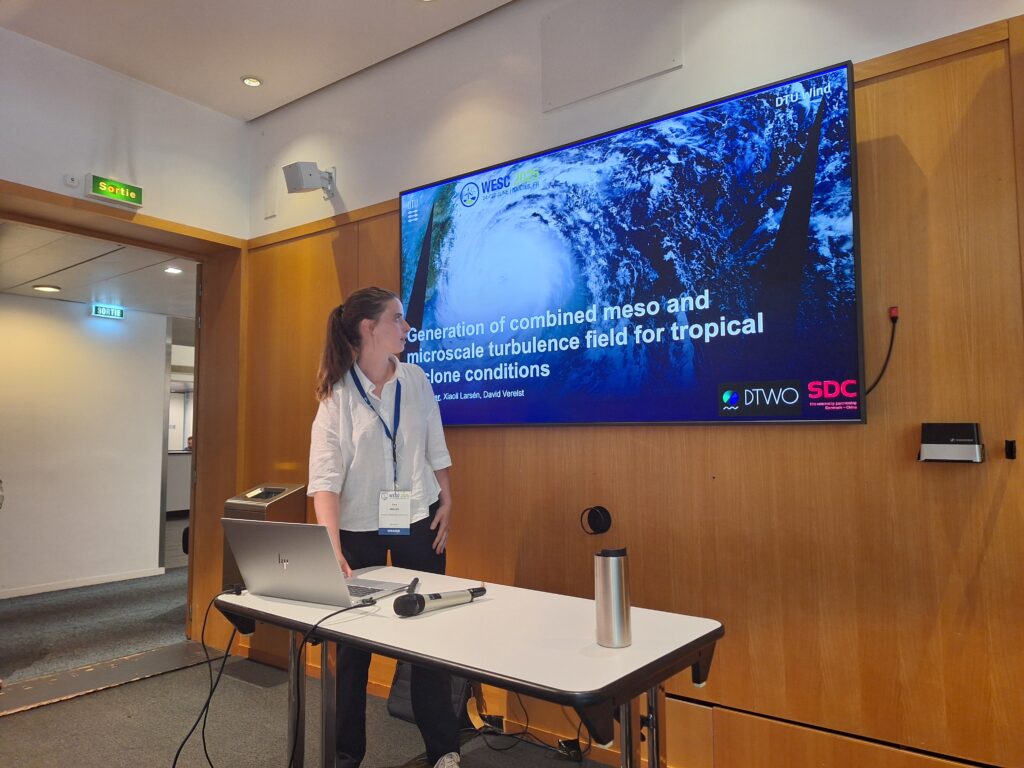
Sara Müller presenting her contribution at WESC 2025
Moreover, Jianting Du from DHI, partner in the DTWO project, presented a compelling case study analysing the operation of wind farms in marine environments, emphasizing the effects of air-sea interaction, monopile blocking, and wake dynamics. Meanwhile, Maxime Lejeune (VKI) demonstrated the application of advanced engineering wake models to assess the monthly power production of the BE-NL offshore cluster, cross-validating his results with ENTSOE data.
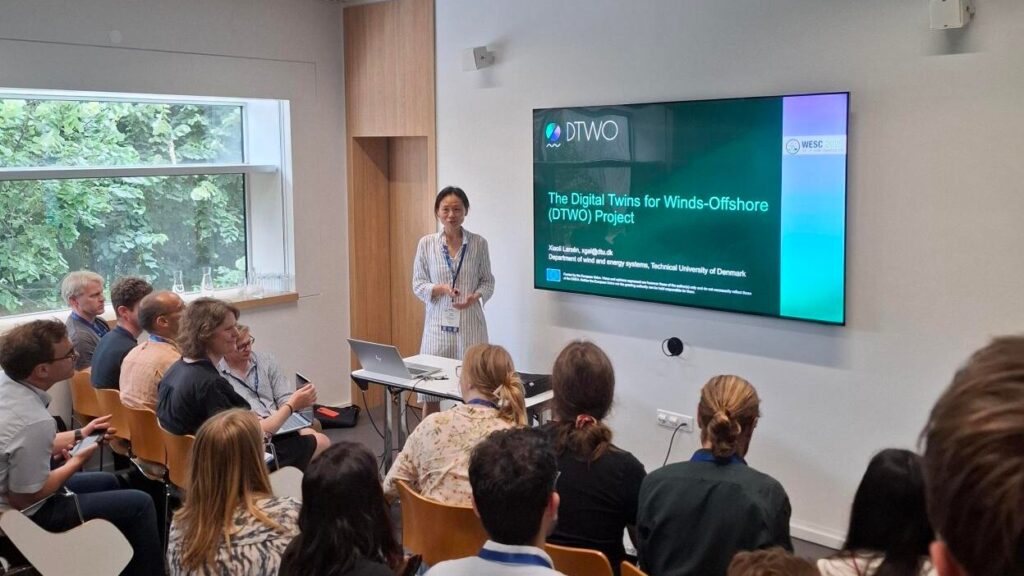
Xiaoli Guo Larsén presenting DTWO at WESC 2025
“We are proud of the expertise and insight DTWO partners brought to this year’s WESC,” concluded Xiaoli. “Our contributions not only showcased the project’s progress but also emphasized its vital role in enhancing the wind sector’s capabilities – an essential pillar for the transition to renewable energy.”


Other updates
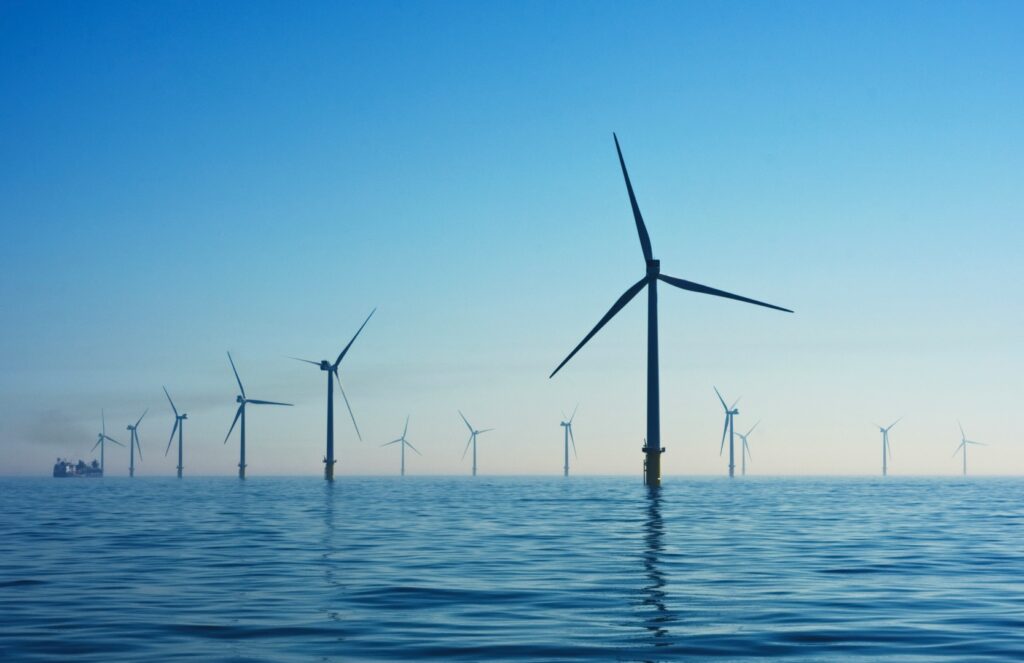
Wind of change: Europe’s race to stay ahead
A new podcast series developed by the Horizon Europe projects DTWO, TAILWIND and SUDOCO explores the challenges, innovations and opportunities shaping the future of European wind energy.
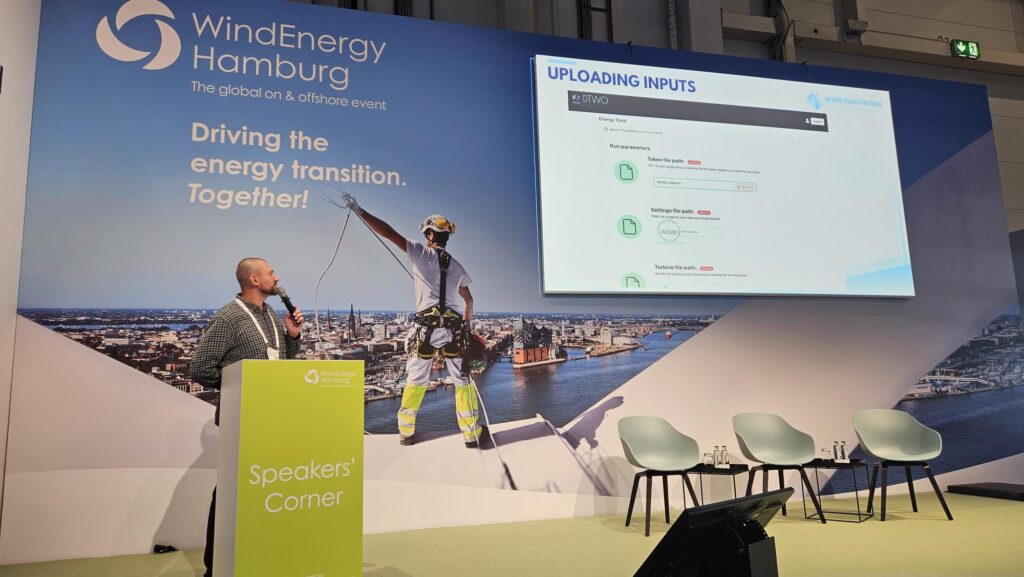
DTWO at WindEnergy Hamburg 2026: connecting innovation across the wind energy sector
The DTWO project joined the international wind energy community at WindEnergy Hamburg 2026, held from 22 to 25 September in Hamburg, Germany.
DTWO joins the new Wind Innovation Cluster Hub
DTWO has joined forces with 17 other Horizon Europe projects to launch the Wind Innovation Cluster Hub, a new collaborative initiative designed to strengthen cooperation and accelerate research and innovation across the European wind energy sector.